 Tarot has captivated the world for centuries. While some individuals believe in its power and consider it magical, others condemn it and consider it dangerous. Meanwhile, some people don’t find it believable at all and make sure to state that it’s not real. Regardless of which group you belong to, one thing is sure: tarot has a unique way of getting into people’s lives and becoming a permanent fixture.
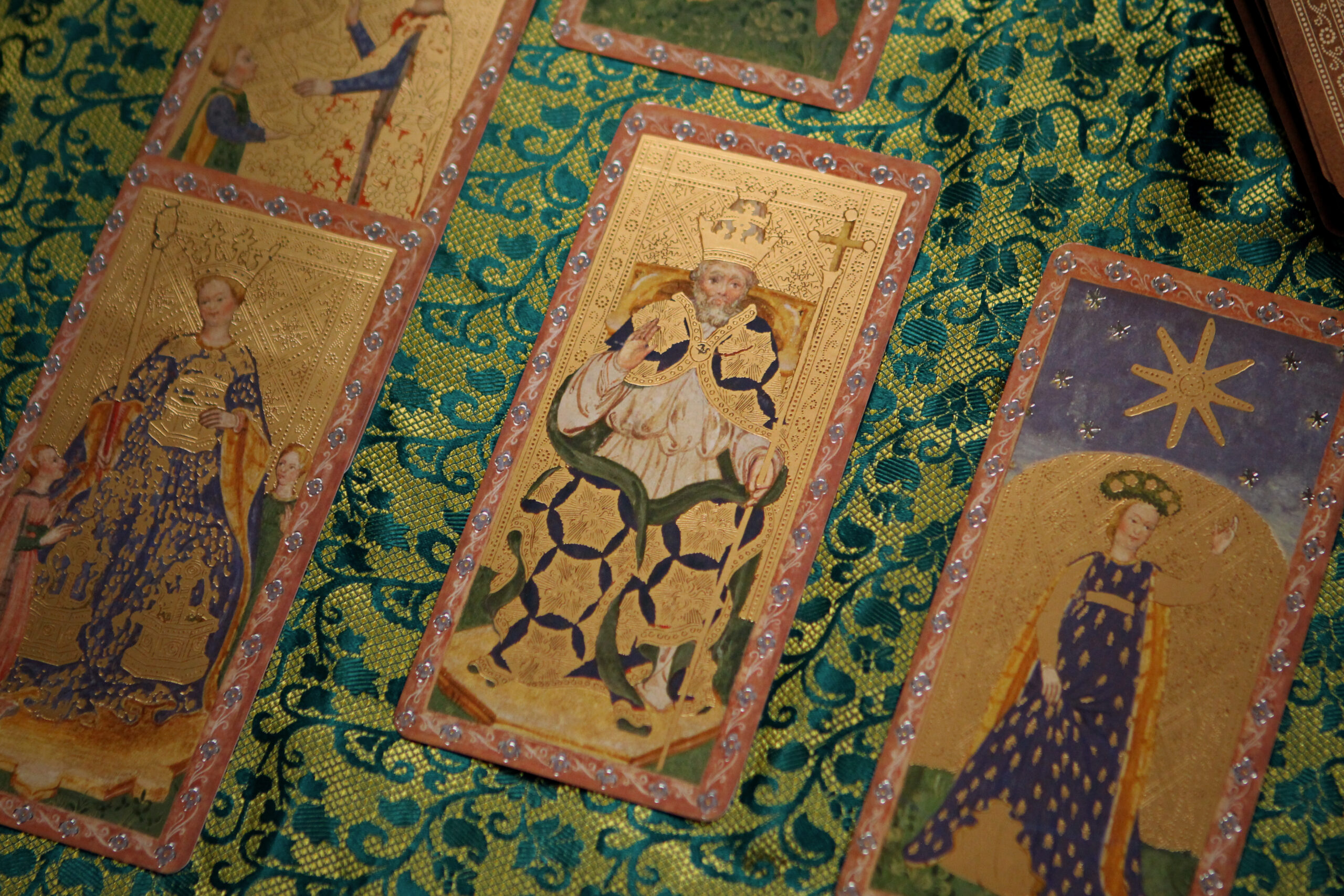
The roots of tarot can be traced back to 15th-century Italy, where it emerged as a successor to a popular card game. The Visconti-Sforza tarot, the oldest surviving deck, is a testament to this era. The deck comprises approximately fifteen incomplete decks commissioned by Filippo Visconti, the Duke of Milan, and his son-in-law. The tarot’s symbolism, initially influenced by Catholic imagery, reflected the times.
In the United States today, the tarot is often viewed as pagan. However, the modern symbolism of tarot has its origins in Catholicism. For example, earlier tarot decks consistently used the card named The Pope, which the Hierophant commonly replaces in modern decks. This change in the card’s name and symbolism is an evident indication of the evolving times.
The Pope is the head of the Catholic Church. He imparts teachings and wisdom from the spiritual realm to help guide individuals on their life path. The Hierophant is similar to the Pope but is associated with different religions. Although the sentiment may be the same, the energy invoked is different.
Throughout history, the tarot has become more pagan in nature. It has evolved to incorporate many different cultures, countries, and religions, giving them a space to impart their wisdom in similar ways. Modern tarot decks are more inclusive and far-reaching than ever before. With their transcendent symbolism, modern tarot decks offer valuable insights beyond cultural and social differences.
Tarot has stood the test of time, adapting to different cultures and beliefs. Its appeal lies in its ability to encourage introspection, establish connections, and reveal universal truths. Whether one views the tarot as a mystical gateway or a psychological tool, it guides a journey of self-discovery. By honoring its diverse and evolving symbolism, we gain access to the collective wisdom of humanity throughout history and around the world.